Research & Data
Measuring outcomes is critical to providing students with the right support and opportunities to thrive.

Our Approach to Research
Every year, an external research firm collects data to evaluate our programs. Our research methods include pre and post surveys, focus groups, demographic data collection, and analysis of publicly available data from the NYC Department of Education, the National Student Clearinghouse, and other sources.
When we use the latest evidence to drive quality improvement, sustainability, and advocacy efforts, we can inspire transformative action to support girls and young people in being strong, smart, and bold.
Girls Inc. of NYC By the Numbers



Student Success
We support our students from elementary school through college and beyond. They develop skills for managing their mental health, caring for their bodies, preparing for financial success, leading the charge for community change, and pursuing their academic and career ambitions.





Our Results
Impact Report 2025
Across all of our programs, students overwhelmingly indicated that:
- Girls Inc. of NYC is a positive place for young people of all identities.
- Our programs offer learning opportunities students haven’t found in other classes.
- Students learned skills to help them succeed in the real world.
- Staff are knowledgeable about the topics they cover.
- Students feel comfortable reaching out to adults facilitating the program.
Mental Health
Mind Body Matters
Students increased their self-confidence and gained skills in coping with stress, managing conflict, and building healthy relationships.
- 84% of students know how to reframe negative thoughts into positive ones (from 65%)
- 86% of have learned ways to resolve conflicts among their friends (from 77%)
- 94% are able to recognize the difference between healthy and unhealthy relationships (from 82%)
- 81% of students know several stress management strategies (from 70%)
- 87% know how to incorporate movement and exercise such as yoga or stretching, to make them feel better (from 68%)
- 73% now know how to do daily wellness activities (from 52%)
- 71% know where to get help if they need support for their feelings (from 63%)
Financial Literacy
Her Future
Students also improved their financial management practices in maintaining a savings account, following a personal budget, creating or following a financial plan for college, and helping family members learn about money matters.
Her Future students reported significant knowledge gains in:
- Creating a budget (81%, from 40%) and creating a personal financial plan (62%, from 22%)
- Credit scores (46%, from 20%), managing credit card debt (50%, from 27%), and strategies for saving money (83%, from 55%)
- Creating a business plan (48%, from 22%)
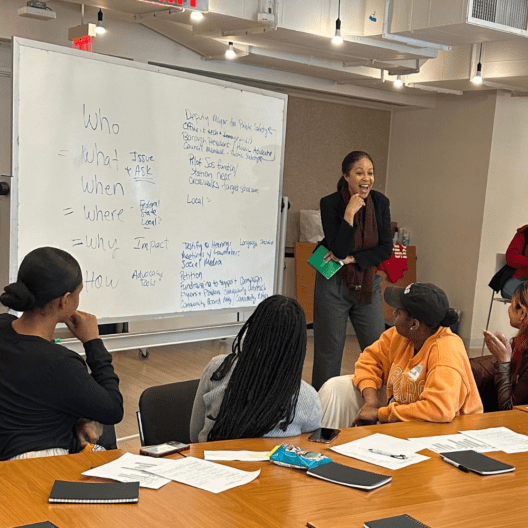
Data Analytics
Generation Giga Girls (G3)
G3 students showed significant gains in math confidence, data analytics, and college and career interest.
- 87% explore different ways to solve a problem before deciding on a solution (vs. 71% pre-program)
- 81% are aware of the different career opportunities available in STEM and entrepreneurship (vs. 68% pre-program)
- 58% reported increased statistical computation confidence (being able to calculate range, interquartile range, and standard deviation, from 48% pre-program)
- 57% are interested in pursuing a career in STEM (vs. 46% pre-program)
- 74% are confident using data to solve real-world problems (vs. 68% pre-program)
- 52% are interested in continuing to take math courses in college (vs. 47% pre-program)
College and Career
Project REACH
Students demonstrated improvements in confidence, the use of support resources, career planning, and setting and achieving goals:
-
91% have a well-defined plan to achieve their goals (vs. 74% pre-program)
-
100% are confident that they will achieve their professional goals (vs. 91% pre- program)
-
73% have a daily routine or schedule that they follow (vs. 53% pre-program)
-
80% use stress management techniques when needed to handle college or professional life (vs. 65% pre-program)
-
74% can manage their time effectively (schoolwork, personal life, work, etc. vs. 65%
Leadership
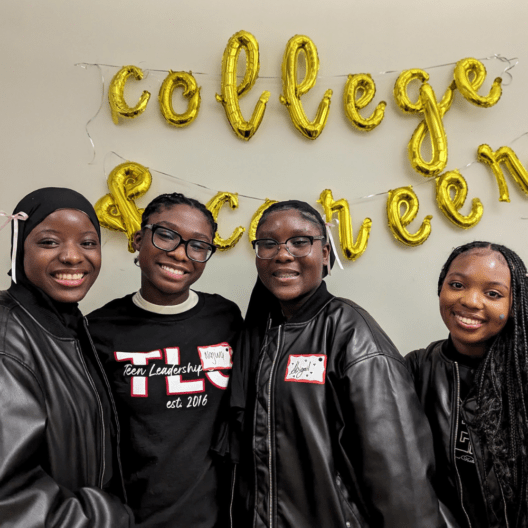
Teen Leadership Circles (TLCs)
TLC peer leaders improved their skills in youth leadership, advocacy, social justice, healthy relationships, and professional development.
- 91% can identify their role models (from 74%)
- 91% are perceived as leaders by their classmates (from 65%)
- 96% are comfortable speaking up when they have something to say (from 78%)
- 83% are confident expressing their thoughts and feelings to others, even when they differ from what the other person thinks and feels (from 74%)
- 87% know how to assess the needs of their community (from 83%)
- 91% understand what community organizing is (from 83%)
- 96% feel a sense of responsibility to their community (from 83%)

Reports from Girls Inc. National
Girls Inc. students outperform peers on key indicators.
From 2017 to 2019, the Girls Inc. national office worked with the American Institutes for Research to implement a quasi-experimental research study with four Girls Inc. affiliates and their school districts in small, medium, and large communities. The results revealed that Girls Inc. changes the trajectory of students’ lives and sets them up for life-long success.